Evidence-Based Health Utility
Blood Pressure & Cardiovascular Risk Calculator (by Age)
Evaluate your resting blood pressure according to American Heart Association (AHA) and American College of Cardiology (ACC) clinical standards. Calculate your Pulse Pressure, Mean Arterial Pressure (MAP), and weight-adjusted cardiovascular risk instantly.
Blood Pressure & Cardiovascular Risk Analyzer
Enter your resting vitals, age, and body measurements to calculate blood pressure category, arterial pressures, and weight-adjusted cardiovascular risk.
Clinical Interpretation:
Recommended Interventions:
Accuracy Notice: Clinical guidelines require resting quietly for 5 minutes and using an appropriately sized, validated upper-arm cuff. Incorrect cuff sizes can skew readings by up to 10 mmHg.
Blood Pressure Categories & Number Ranges (AHA / ACC Guidelines)
Blood pressure is documented with two numbers: Systolic pressure (the top number indicating arterial force when heart beats) and Diastolic pressure (the bottom number measuring arterial resting pressure between beats). If systolic and diastolic numbers fall into separate tiers, your category is always determined by the higher measurement.
| Category | Systolic (mmHg) | Relation | Diastolic (mmHg) | Action Recommended |
|---|---|---|---|---|
| Low (Hypotension) | < 90 | or | < 60 | Electrolytes, hydration; review if symptomatic |
| Normal (Optimal) | < 120 | and | < 80 | Maintain healthy lifestyle; screen yearly |
| Elevated | 120 – 129 | and | < 80 | Lower dietary sodium, exercise, re-test 3–6 mo |
| Hypertension Stage 1 | 130 – 139 | or | 80 – 89 | Lifestyle overhaul; medication if 10-yr CVD risk ≥ 10% |
| Hypertension Stage 2 | 140 – 179 | or | 90 – 119 | Prescription therapy (often dual-drug) + clinical care |
| Hypertensive Crisis | ≥ 180 | or | ≥ 120 | IMMEDIATE emergency medical consultation |
Blood Pressure Targets by Age
Vascular collagen cross-linking and loss of elastin cause progressive arterial stiffness as we grow older. Here is how age influences clinical targets:
- Ages 18–39: Target is < 115/75 mmHg. High blood pressure in young adults is strongly tied to early endothelial damage and warrants prompt dietary evaluation.
- Ages 40–64: Target is < 120/80 mmHg. This demographic represents the highest onset of metabolic syndrome and elevated peripheral resistance.
- Ages 65+: General target is < 130/80 mmHg. In older adults, isolated systolic hypertension (high top number with normal bottom number) is common; clinicians balance lowering systolic numbers without dropping diastolic below 65 mmHg to prevent fainting or reduced cerebral perfusion.
How to Measure Blood Pressure Accurately at Home
Clinical evaluations show that over 30% of high readings recorded at home are inaccurate due to poor preparation or improper positioning. Follow this protocol for clinical-grade reliability:
- Pre-Measurement Quiet Time (5 Minutes): Do not smoke, consume caffeine, take decongestants, or exercise within 30 minutes of measuring. Empty your bladder completely. Sit quietly in a back-supported chair for 5 full minutes before turning on the device.
- Correct Body Alignment: Keep your back supported and both feet flat on the floor (never cross your legs). Rest your arm on a table or armrest so the cuff is positioned level with your heart (mid-sternum). Resting your arm too low can falsely increase readings by 5–10 mmHg.
- Upper-Arm Cuff Placement: Wrap the cuff around bare skin 1 inch above the crease of your elbow. Ensure the inflatable bladder encircles 80% to 100% of your upper arm. You should be able to slide two fingertips under the cuff snugly. Never place cuffs over clothing.
- Double-Take Averaging: Take your first reading, record it, and sit calmly for 60 seconds. Take a second reading and calculate the average. If tracking for a doctor, measure twice daily: once in the morning before food or medications, and once in the evening before bedtime.
-
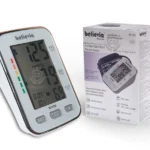
Believia Digital BP 40A Best Digital Blood Pressure Machine in Pakistan
PKR 5,800Original price was: PKR 5,800.PKR 5,500Current price is: PKR 5,500. -
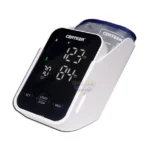
Best Digital Blood Pressure Machine Certeza BM-450
PKR 6,000Original price was: PKR 6,000.PKR 5,650Current price is: PKR 5,650. -
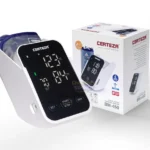
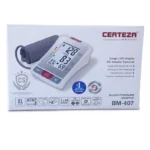
BLOOD PRESSURE MONITOR DIGITAL CERTEZA 407 UPPER ARM
PKR 5,200Original price was: PKR 5,200.PKR 4,950Current price is: PKR 4,950. -
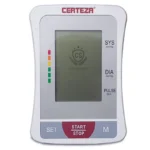
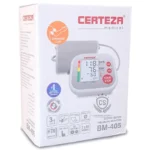
Blood Pressure Monitor Digital Certeza BM 405 upper arm
PKR 4,800Original price was: PKR 4,800.PKR 4,500Current price is: PKR 4,500. -
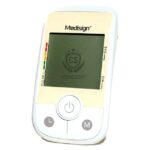
Blood Pressure Monitor Digital Medisign BPM-36 Upper Arm
PKR 5,700Original price was: PKR 5,700.PKR 5,500Current price is: PKR 5,500. -
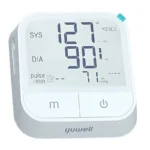
Blood Pressure Monitor Digital YUWELL YE670AR RECHARGEABLE
PKR 8,800Original price was: PKR 8,800.PKR 8,200Current price is: PKR 8,200.
7 Evidence-Based Protocols to Lower Blood Pressure Naturally
Clinical trials demonstrate that structured non-pharmacological interventions can lower systolic blood pressure by 10 to 20 mmHg—matching or exceeding the effect of a first-line antihypertensive drug.
1. The DASH Dietary Blueprint
Follow the Dietary Approaches to Stop Hypertension (DASH) pattern. Prioritize whole grains, poultry, fish, beans, and nuts while curtailing sweets, red meat, and sugary drinks. (Lowers Systolic by 8–14 mmHg).
2. Sodium & Potassium Rebalance
Limit sodium to < 2,000 mg/day (ideal: 1,500 mg). Increase dietary potassium (3,500–4,700 mg/day) via leafy spinach, bananas, sweet potatoes, and lentils to facilitate renal sodium excretion. (Lowers Systolic by 5–8 mmHg).
3. Isometric Wall Squats
Perform four 2-minute isometric wall squats with 2-minute rests, 3 times per week. Isometric holds stimulate immediate post-exercise vasodilation and down-regulate vascular resistance. (Lowers Systolic by 8–10 mmHg).
4. Visceral Weight Reduction
Blood pressure typically drops by approximately 1 mmHg for every 1 kilogram lost. Keep waist circumference below 40 inches for men and 35 inches for women to relieve direct pressure on the renal system.
5. Resonant Vagal Breathing
Practice 5 minutes of slow, paced breathing (4-second inhale, 6-second exhale; 6 breaths per minute). This stimulates the vagus nerve, enhances baroreflex sensitivity, and dampens sympathetic vascular tone.
6. Screen for Sleep Apnea
Chronic nocturnal hypoxia triggers repetitive adrenaline surges that perpetuate drug-resistant daytime hypertension. Diagnosing and treating Obstructive Sleep Apnea (OSA) often normalizes resistant readings.
What is considered an ideal, healthy blood pressure reading?
An ideal resting blood pressure for adults is a systolic reading under 120 mmHg AND a diastolic reading under 80 mmHg (written as <120/<80 mmHg).
Why does the calculator require my weight and height?
Weight and height allow the calculator to compute your Body Mass Index (BMI). Excess body weight directly increases vascular resistance and activates the renin-angiotensin-aldosterone system (RAAS), which raises cardiac workload. Analyzing blood pressure alongside BMI provides a more comprehensive cardiovascular risk profile.
What is Mean Arterial Pressure (MAP) and why does it matter?
Mean Arterial Pressure (MAP) represents the average perfusion pressure across your cardiac cycle. A normal MAP sits between 70 and 100 mmHg. A MAP below 60 mmHg indicates that vital organs may not receive enough blood flow, while a MAP chronically above 100 mmHg indicates high systemic vascular strain.
What is Pulse Pressure and what does a high number mean?
Pulse Pressure is the difference between your systolic and diastolic numbers (Systolic minus Diastolic). A normal pulse pressure is approximately 40 mmHg. Readings consistently above 60 mmHg reflect stiffening of the large arteries (common in older adults) and represent an independent risk factor for cardiovascular events.
When is high blood pressure considered a medical emergency?
A blood pressure reading of 180 mmHg or higher systolic, OR 120 mmHg or higher diastolic, is classified as a Hypertensive Crisis. If this reading is accompanied by symptoms such as chest pain, shortness of breath, sudden numbness, back pain, or vision changes, seek immediate emergency medical care.